

Dieting and Weight Loss in 2026: One Commonly Overlooked Factor
Weight loss can seem like a daunting task, but like everything else in life, it takes time and consistency, but the results will occur with the right strategy, consistency and dedication – evidence of amazing results are shown all over social media everyday.
Taking small, seemingly unimportant steps can lead to big results, whatever your end goal is.
Today I cover one commonly overlooked factor when it comes to diet and weight loss: calorie deficit.
Calorie deficits and their importance
Simply put, fat loss occurs when your body is in calorie deficit mode. In other words, when more calories are burned than are consumed daily, fat loss can begin to take place.
Sure there are many ways to ensure you are at a calorie deficit, such as building muscle mass, given that muscle burns calories even while resting. Don’t get me wrong, building muscle is important as well, and so are other factors, but I’ll be covering that in later articles, so stay tuned.
Today I’m going to cover a way to help fight cravings through your diet. You don’t need to pay for some expensive “fancy diet” program they market. Simple, consistent actions will help, particularly by eating foods that are less calorie-dense.
Calorie Dense Foods Vs. Lower Calorie Dense Foods
If you think of a nice, juicy burger with fries compared to a lighter meal with grilled chicken and veggies as a side, there is a stark difference. The delicious burger, an iconic food around the world at this point, is actually a lot more calorie-dense than a grilled chicken meal with veggies as a side. The image below shows you a rough comparison:
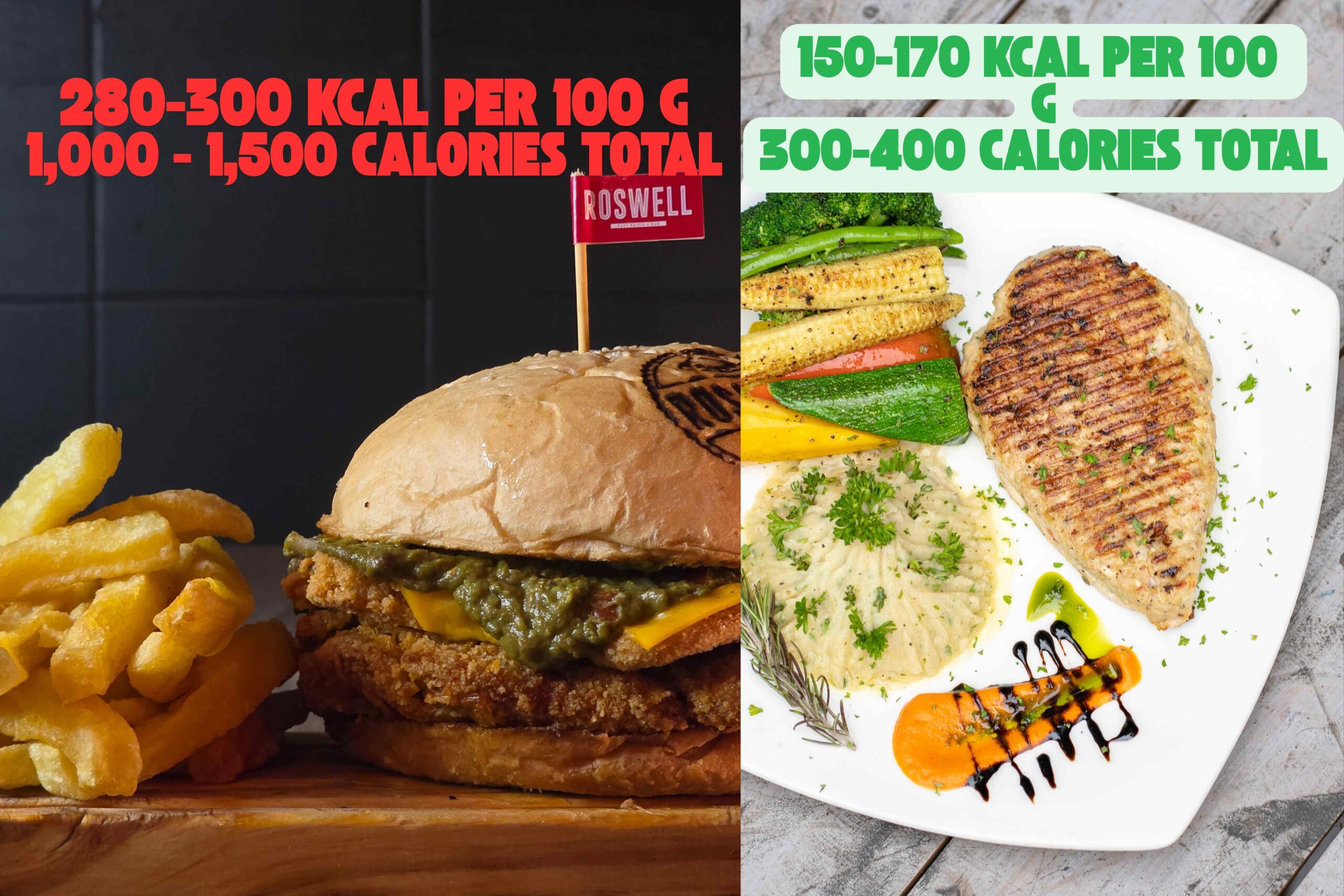
Do you recall a time you ate a burger and fries on a day out at a restaurant and for some reason felt hungry a little later on in the day?
Meals with lower fiber, protein and overall water volume cause blood sugar to crash, which is why the hunger creeps up again a little later on. Ultra-processed foods, refined carbs, and sugars cause a boost blood glucose, followed by an increase in insulin, inevitably leading to the “crash” that causes the hunger to come back. You can read more on caloric density in food in the following article.
Calorie-Dense foods vs. Nutrient-Dense Foods.
(Note: For educational purposes only. Always seek the advice and expertise from your medical professional regarding diet and hunger cravings).
Substituting High Calorie Density Foods with Less Calorie Dense Foods
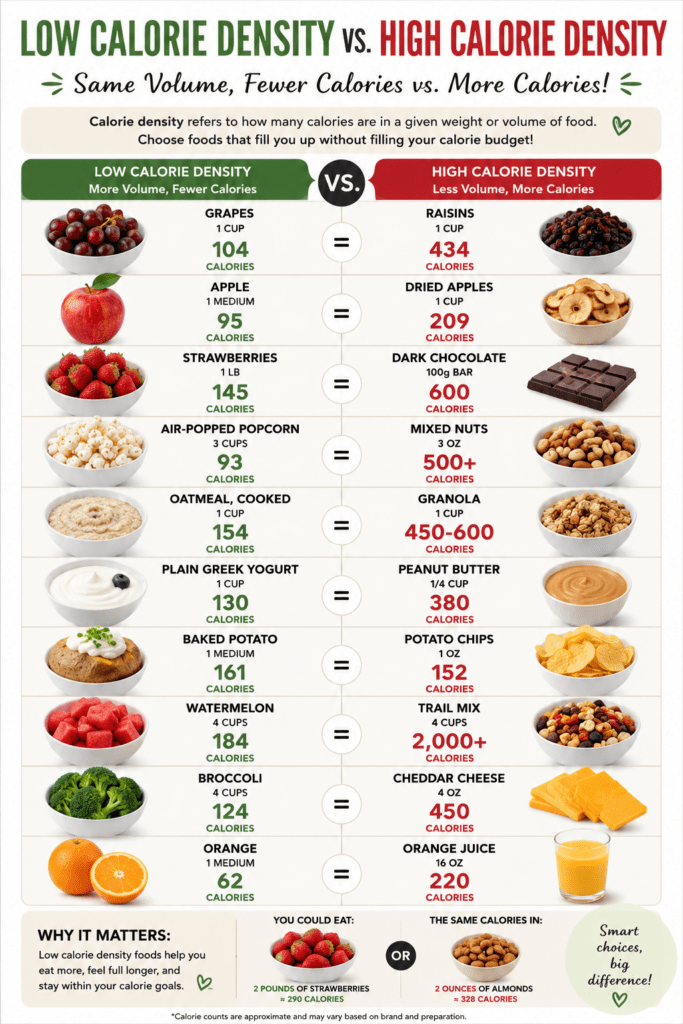
Once you get the concept down, knowing what substitutes to choose will start to come naturally, such as eating actual grapes vs. raisins; apples vs. dried apples; plain yogurt vs. peanut butter, etc. Here is a diagram I put together of some examples.
Wrap-Up:
Fat loss calls for a calorie deficit over a period of time, and the ability to immediately distinguish foods that are higher in caloric density relative to lower calorie density foods will pay off on a person’s weight loss journey.
Consuming food that is lower in caloric density is by no means the only way to reach a calorie deficit, nor is it more important than other strategies, such as workout routines, building muscle mass, protein count, etc., but it is an effective strategy that can be coupled with others to reach your end goal.
Stay tuned for more articles for your fitness journey, where I’ll cover more on fitness for beginners, safety, effective exercises, tips/hacks, and much more.
-Cheers!
References:
DFD Russell. (n.d.). Nutrient-dense foods. https://www.dfdrussell.org/nutrient-dense-foods/